
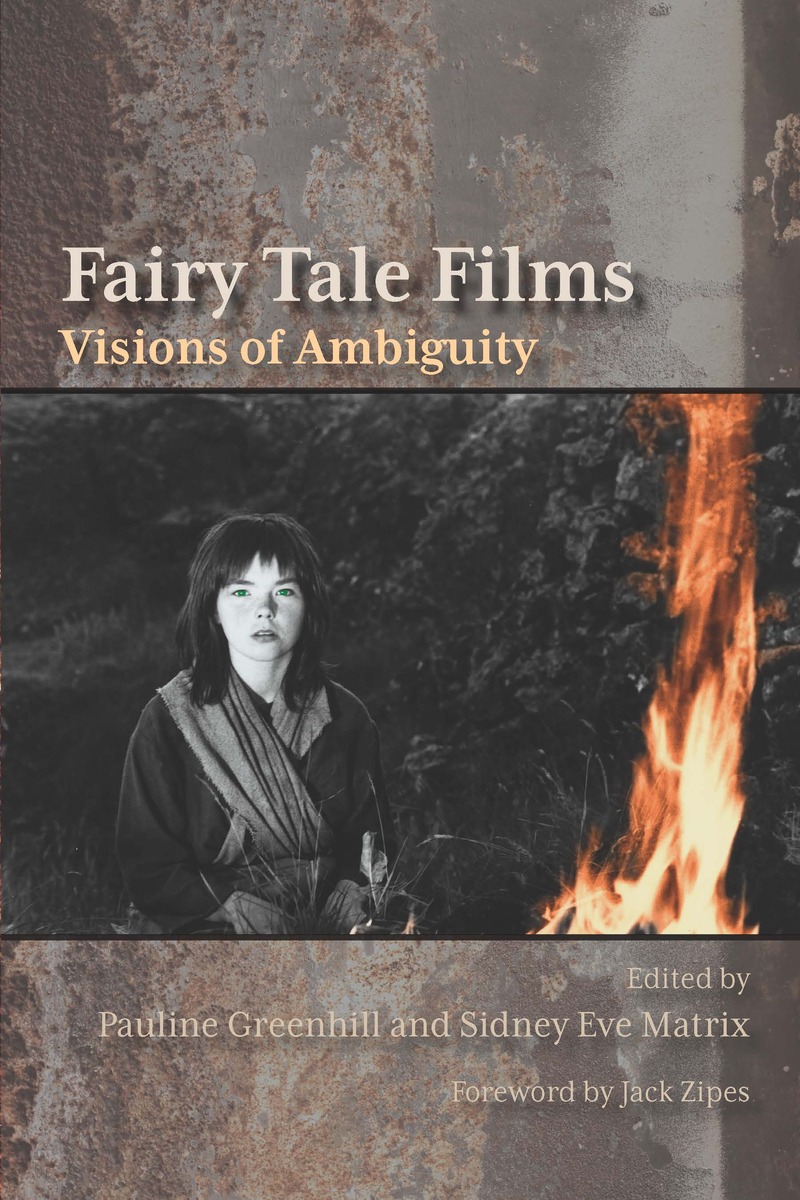
edited by Pauline Greenhill and Sidney Eve Matrix
Utah State University Press, 2010
Paper: 978-0-87421-781-0
eISBN: 978-0-87421-782-7 (all)
This ISBN refers to the ebook edition of this text, available directly from the publisher. It has erroneously been listed as paperback by some online vendors. The true paperback edition is indeed available at online vendors. Paste this ISBN into the search box: 9780874217810.
In this, the first collection of essays to address the development of fairy tale film as a genre, Pauline Greenhill and Sidney Eve Matrix stress, "the mirror of fairy-tale film reflects not so much what its audience members actually are but how they see themselves and their potential to develop (or, likewise, to regress)." As Jack Zipes says further in the foreword, “Folk and fairy tales pervade our lives constantly through television soap operas and commercials, in comic books and cartoons, in school plays and storytelling performances, in our superstitions and prayers for miracles, and in our dreams and daydreams. The artistic re-creations of fairy-tale plots and characters in film—the parodies, the aesthetic experimentation, and the mixing of genres to engender new insights into art and life— mirror possibilities of estranging ourselves from designated roles, along with the conventional patterns of the classical tales.”
Here, scholars from film, folklore, and cultural studies move discussion beyond the well-known Disney movies to the many other filmic adaptations of fairy tales and to the widespread use of fairy tale tropes, themes, and motifs in cinema.
The essays in Fairy Tale Film seek to keep our eyes open and sharpen our perspective. Folk and fairy tales pervade our lives constantly through television soap operas and commercials, in comic books and cartoons, in school plays and storytelling performances, in our superstitions and prayers for miracles, and in our dreams and daydreams. The artistic re-creations of fairy-tale plots and characters in filmýthe parodies, the aesthetic experimentation, and the mixing of genres to engender new insights into art and lifeýare significant because they mirror possibilities of estranging ourselves from designated roles and the conventional patterns of the classical tales. As Greenhill and Matrix stress in their introduction, "the mirror of fairy-tale film reflects not so much what its audience members actually are but how they see themselves and their potential to develop (or, likewise, to regress)."
—Jack Zipes, from the foreword
Label: This book is freely available in digital formats through the Utah State University Library Digital Commons.
License: CC BY-NC-ND 4.0

 Loading...