
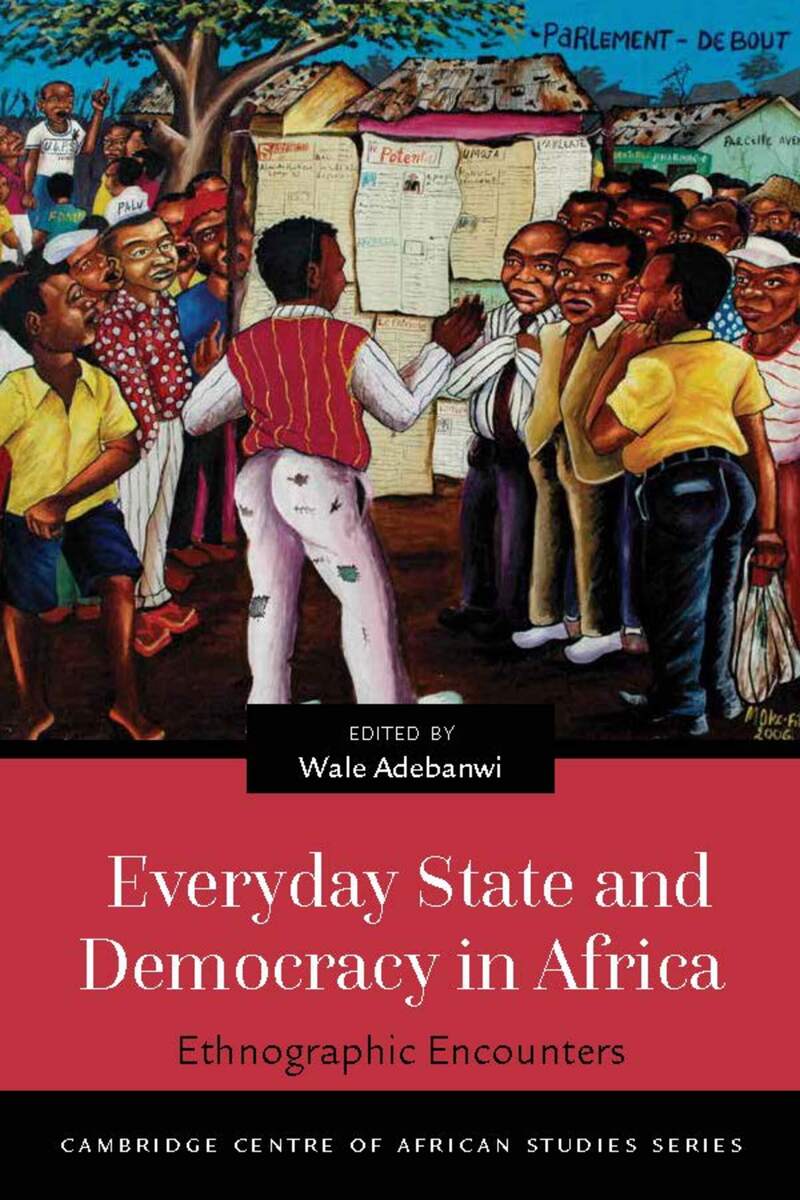
edited by Wale Adebanwi
Ohio University Press, 2022
Cloth: 978-0-8214-2487-2
Paper: 978-0-8214-2490-2
eISBN: 978-0-8214-4779-6
Bottom-up case studies, drawn from the perspective of ordinary Africans’ experiences with state bureaucracies, structures, and services, reveal how citizens and states define each other.
This volume examines contemporary citizens’ everyday encounters with the state and democratic processes in Africa. The contributions reveal the intricate and complex ways in which quotidian activities and experiences—from getting an identification card (genuine or fake) to sourcing black-market commodities to dealing with unreliable waste collection—both (re)produce and (re)constitute the state and democracy. This approach from below lends gravity to the mundane and recognizes the value of conceiving state governance not in terms of its stated promises and aspirations but rather in accordance with how people experience it.
Both new and established scholars based in Africa, Europe, and North America cover a wide range of examples from across the continent, including
- bureaucratic machinery in South Sudan, Nigeria, and Kenya
- infrastructure and shortages in Chad and Nigeria
- disciplinarity, subjectivity, and violence in Rwanda, South Africa, and Nigeria
- the social life of democracy in the Congo, Cameroon, and Mozambique
- education, welfare, and health in Ethiopia, the Democratic Republic of Congo, and Burkina Faso
Everyday State and Democracy in Africa demonstrates that ordinary citizens’ encounters with state agencies and institutions define the meanings, discourses, practices, and significance of democratic life, as well its distressing realities.
Contributors:
- Daniel Agbiboa
- Victoria Bernal
- Jean Comaroff
- John L. Comaroff
- E. Fouksman
- Fred Ikanda
- Lori Leonard
- Rose Løvgren
- Ferenc Dávid Markó
- Ebenezer Obadare
- Rogers Orock
- Justin Pearce
- Katrien Pype
- Edoardo Quaretta
- Jennifer Riggan
- Helle Samuelsen
- Nicholas Rush Smith
- Eric Trovalla
- Ulrika Trovalla
Wale Adebanwi is Presidential Penn Compact Professor of Africana Studies at the University of Pennsylvania. His monographs include Authority Stealing: Anti-Corruption War and Democratic Politics in Post-Military Nigeria, Yorùbá Elites and Ethnic Politics in Nigeria: Ọbáfẹ́mi Awólọ́wọ̀ and Corporate Agency, and The Nation as Grand Narrative: The Nigerian Press and the Politics of Meaning.
Label: Open Access - No commercial reuse
License: CC BY-NC-ND

 Loading...