
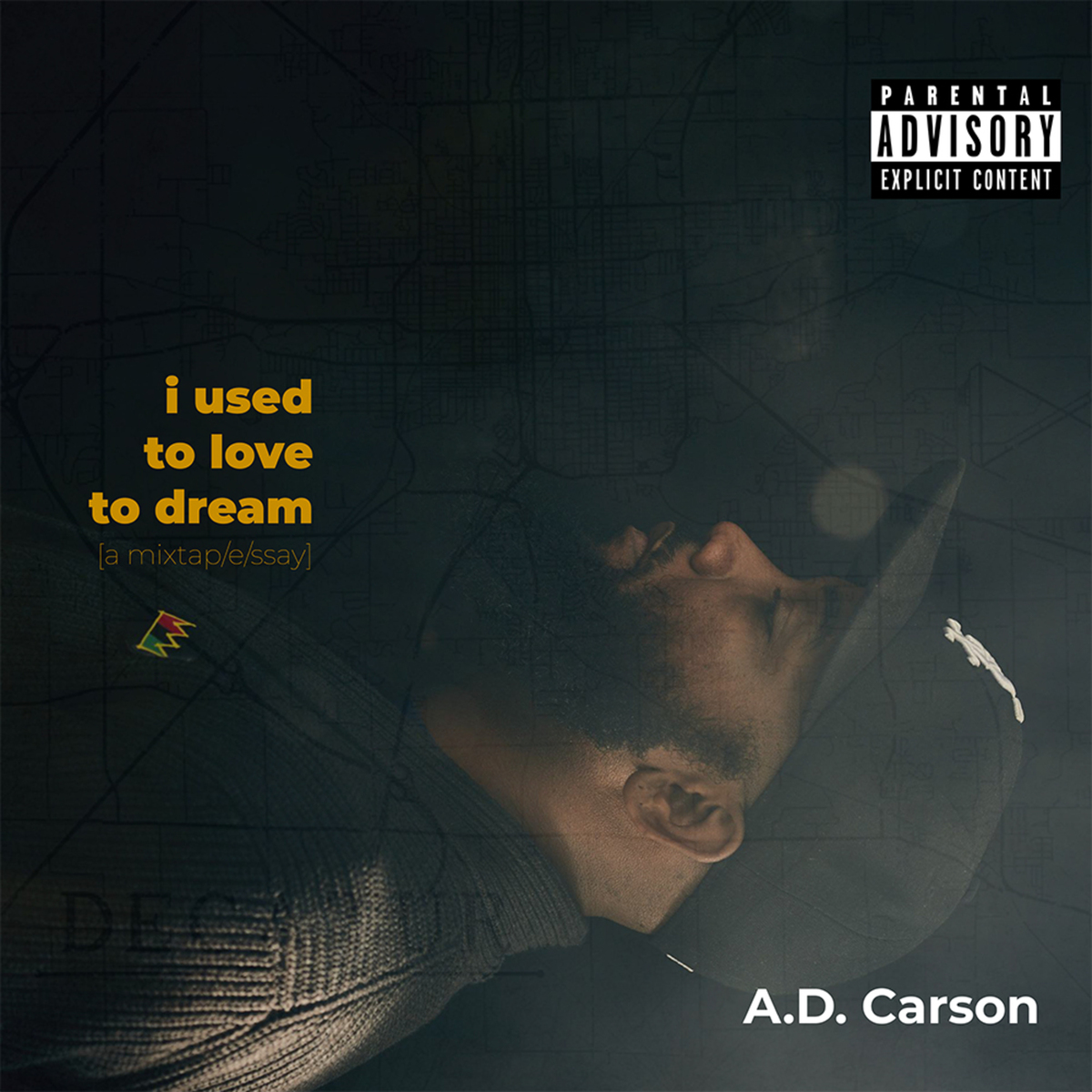
by A.D. Carson
University of Michigan Press, 2020
eISBN: 978-0-472-99903-3 (OA)
“i used to love to dream” is a mixtap/e/ssay that performs hip-hop scholarship using sampled and live instrumentation; repurposed music, film, and news clips; and original rap lyrics. As a genre, the mixtap/e/ssay brings together the mixtape—a self-produced or independently released album issued free of charge to gain publicity—and the personal and scholarly essays. “i used to love to dream” names Decatur, Illinois—the author's hometown—as a reference point for place- and time-specific rapped ruminations about the ideas of growing up, moving away, and pondering one's life choices. At the same time, the tracks attempt to account for moral, philosophical, and ethical dimensions undergirding unease about authenticity, or staying true to oneself and to one’s city or neighborhood, as well as the external factors that contribute to such feelings. Using the local to ask questions about the global, “i used to love to dream” highlights outlooks on Black life generally, and Black manhood in particular, in the United States.
The tracks are presented along with liner notes and a short documentary about the making of the mixtap/e/ssay, and accompanying articles to provide context for the tracks for listeners both in classrooms and outside of them.
A.D. Carson is Assistant Professor of Hip Hop and the Global South at the University of Virginia.
would be like saying that the experience of being high is a strange breathing
experience, or that the experience of an overdose is a bad measuring experience.
The project cannot be reduced to the sounds, images, texts, and thin genre
descriptions that comprise it. With this disturbingly personal offering, Carson
gives us a dope critical process of inhaling and engaging today’s most pressing
questions about home and national identity, empire and the geography of
oppression, and the intimate politics of survival and transformation. I urge you to
spend time with this project. Submerge your entire body in it. Argue with it.
Demand that it explain why it approaches things the way it does. I’m not sure if
disciplines—as currently embodied—deserve or can handle this hit, but all of us
need what is revealed on this journey."
—Chenjerai Kumanyika, Rutgers University
"i used to love to dream breaks new ground, speaks to compelling issues in our
time, and is clearly rooted in both scholarship and Black rhetorical traditions,
even as it intervenes in both."
—Adam Banks, Stanford University
of broadening what is considered tenure-worthy scholarship"
—Journal of the American Musicological Society
—Journal of Popular Music Studies
as artistic expression with both didactic and symbolic intellectual content,
Carson’s professorial and artistic concerns pushes this assumption to another
level. Carson uses the art of music to participate equally with literature as a form
of cultural criticism."
—Guthrie Ramsey, University of Pennsylvania
—Kairos: A Journal of Rhetoric, Technology, and Pedagogy
License: CC BY-NC

 Loading...