
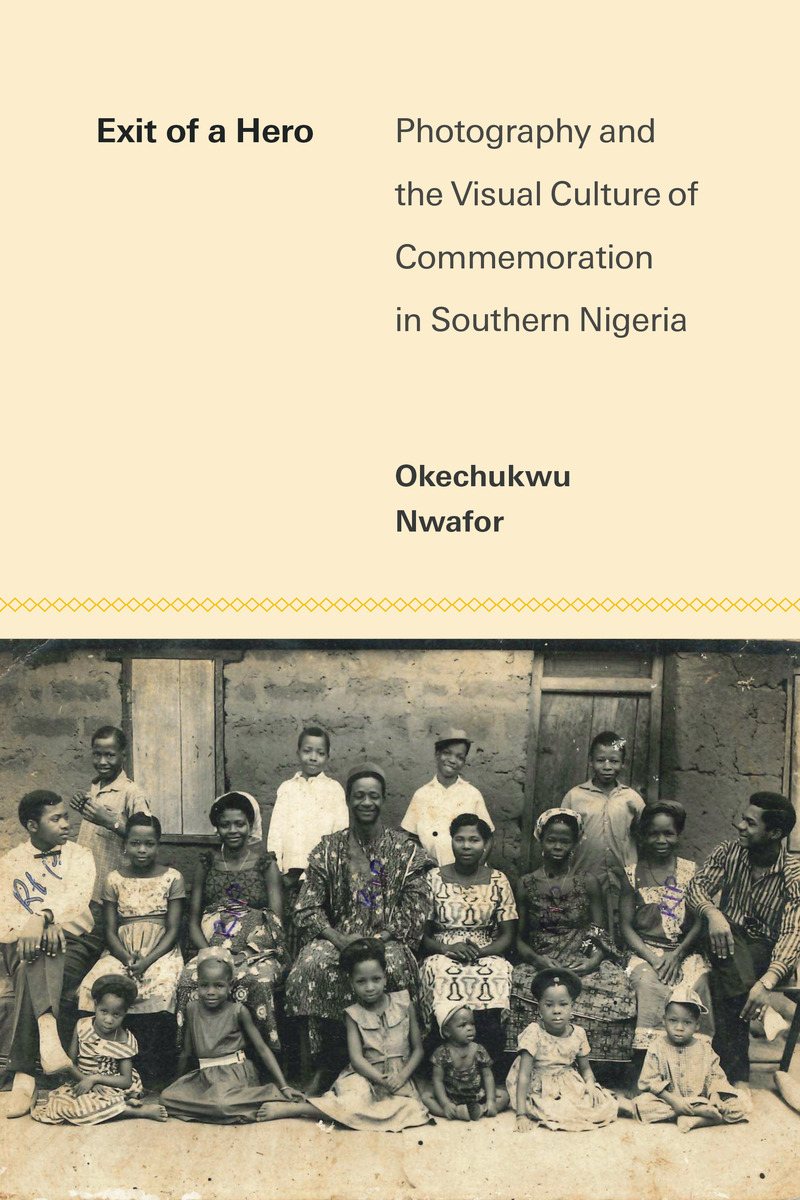
by Okechukwu Nwafor
University of Michigan Press, 2026
Cloth: 978-0-472-07806-6
Paper: 978-0-472-05806-8
eISBN: 978-0-472-90582-9 (OA)
In Exit of a Hero, Okechukwu Nwafor explores the cultural, political, and socioeconomic implications of photography in commemorative practices in southern Nigeria from the nineteenth century to the present. Focusing on obituary and commemorative photographs of late nineteenth and early twentieth-century Lagos to contemporary funeral posters, booklets, and social media posts, Nwafor tracks the historical evolution of the iconic and heroic image. He argues that the quest to produce an ideal memorial body is not just a personal aesthetic choice but a deliberate photographic project that resonates with the Igbo aspirations for heroic achievement.
Exit of a Hero asserts that the visual canonization transforms the deceased from a fallible being to an unimpeachable character who transcends underachievement, imperfection, and failed social performance to emerge as a saintly icon of the Igbo public sphere. In seeking an alternative, hyper-visible public self, social media reclaims the lost hero image of the deceased, reconstituting the contested Igbo public space as a lived reality where heroes and icons are actively and eternally commemorated. Nwafor unveils the creative imaginations of colonial subjects and postcolonial citizens as memorialization has become entangled within the intersecting discursive spaces of print culture and the public sphere.
“Exit of a Hero brilliantly situates photographic portraiture within the broader sphere of commemorative visualities in Lagos. Negotiating between colonial-era print obituaries, Yoruba and Igbo arts of commemoration, and digital platforms, Nwafor deftly illuminates photography’s ongoing shaping of African publics, offers exciting new thinking about photographic materiality, and firmly establishes Lagos as a laboratory of pan-Nigerian and Black modernities with global implications.”
— Jennifer Bajorek, Hampshire College“Exit of a Hero ushers in a host of exciting ideas at the cutting edge of global visual theory and interdisciplinary studies in African photography. The genealogy of funerary commemorative practices goes from older sculptural forms to the new ‘ancestral screen,’ from colonial portraiture in print media to the dramatic convergence of new subjectivities, social media platforms and the veneration of the dead in the twenty-first century global public sphere.”
— Patricia Hayes, University of the Western Cape“Clearly written, very readable and engaging, this book artfully evokes how the making and sharing of photographs in southern Nigeria assists people as they make sense of death and the existential experiences of sorrow, consolation, memorialization, condolence, and affirmation.”
— Liam Buckley, James Madison UniversityLicense: CC BY-NC

 Loading...